Sculptural enough to belong in the room before it plays a note.
Byurakan leaves only the music.
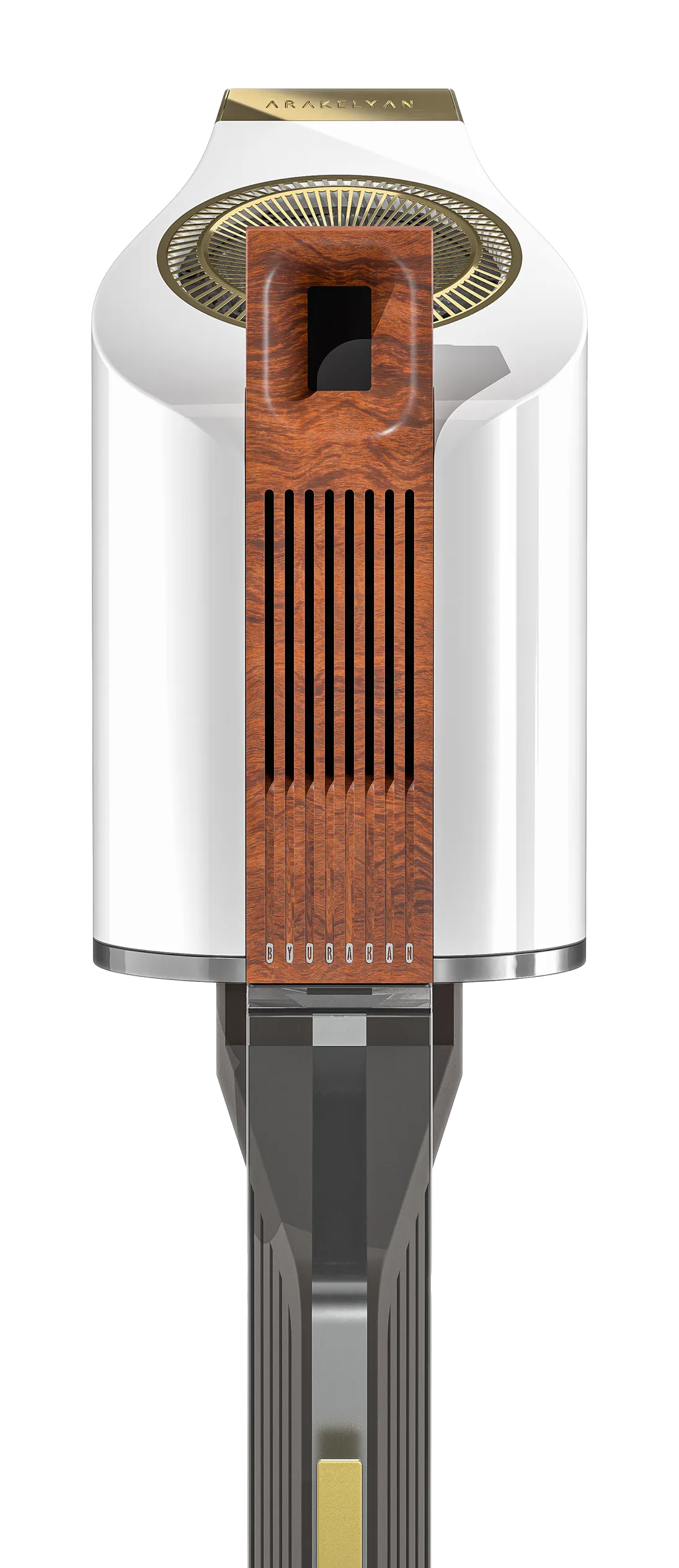
A five-driver, three-way reference standmount where the baffle, enclosure, crossover, and stand are designed as one acoustic object.
Format 5-driver, 3-way standmount
Upper bands Planar magnetic mid + treble
Bass PURIFI woofer · dual PR
Enclosure ARMAT X molded unibody
Why it exists
A speaker should not ask you to choose between the object and the sound.
Byurakan was conceived against a familiar compromise: loudspeakers that look composed but sound ordinary, or loudspeakers that perform seriously while asking the room to forgive them.
Here, the visual identity and acoustic architecture come from the same decisions. The curves, side radiators, open upper baffle, exposed crossover, and dedicated stand form a complete system: sculptural in the room, yet aimed at sonic disappearance.
Three commitments that drove every other decision
Low cabinet contribution. Clean handoffs between drivers. Drivers chosen for ease, not spec-sheet appeal.
A broad, open presentation that still holds image placement in focus.
Visual and sonic design
Functional artwork,
with consequences.
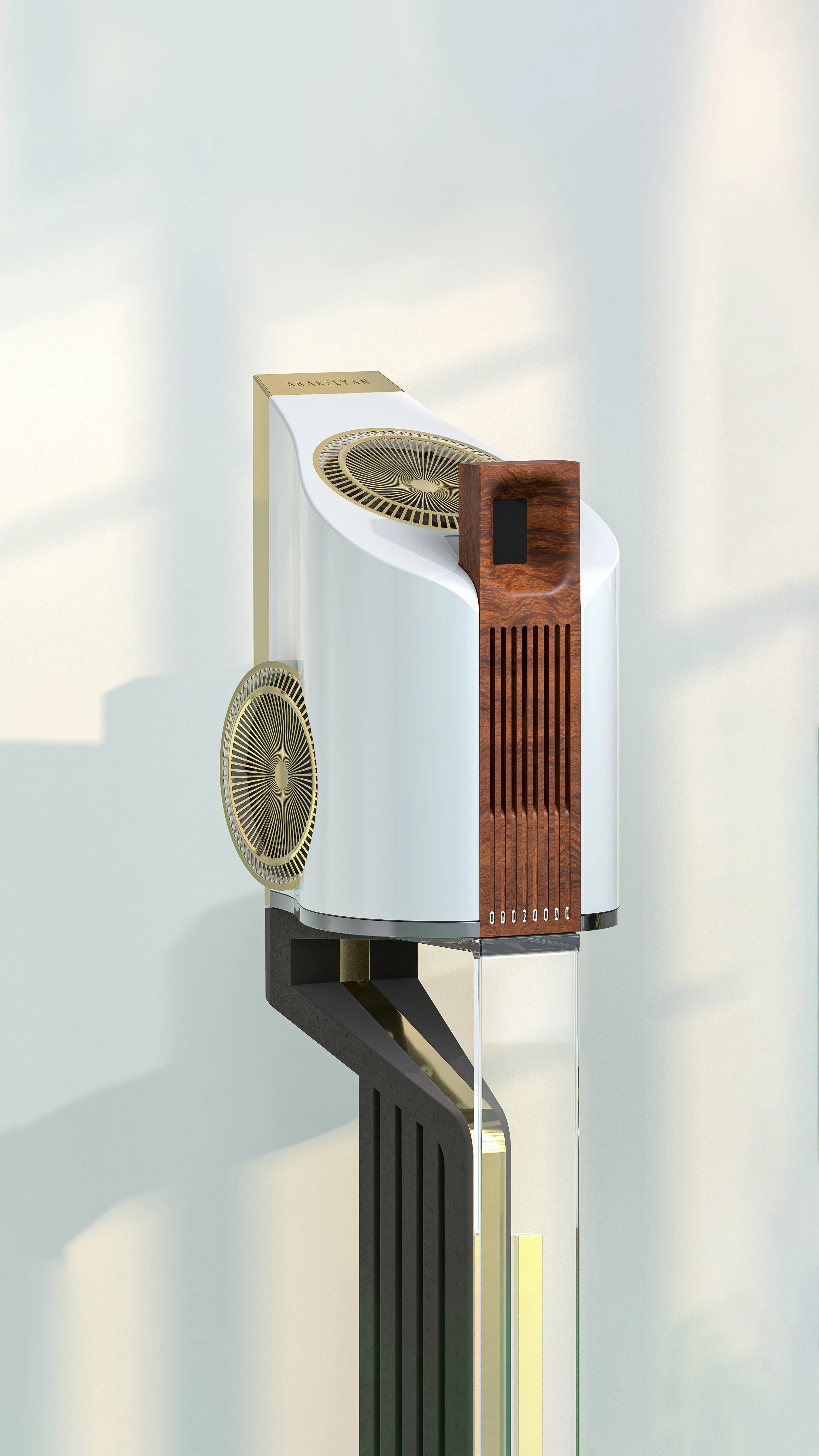
The machined solid-wood baffle gives Byurakan its architectural face: flowing arcs, soft transitions, and a waveguide geometry that makes the product look unlike a conventional electronics box because it is not designed like one.
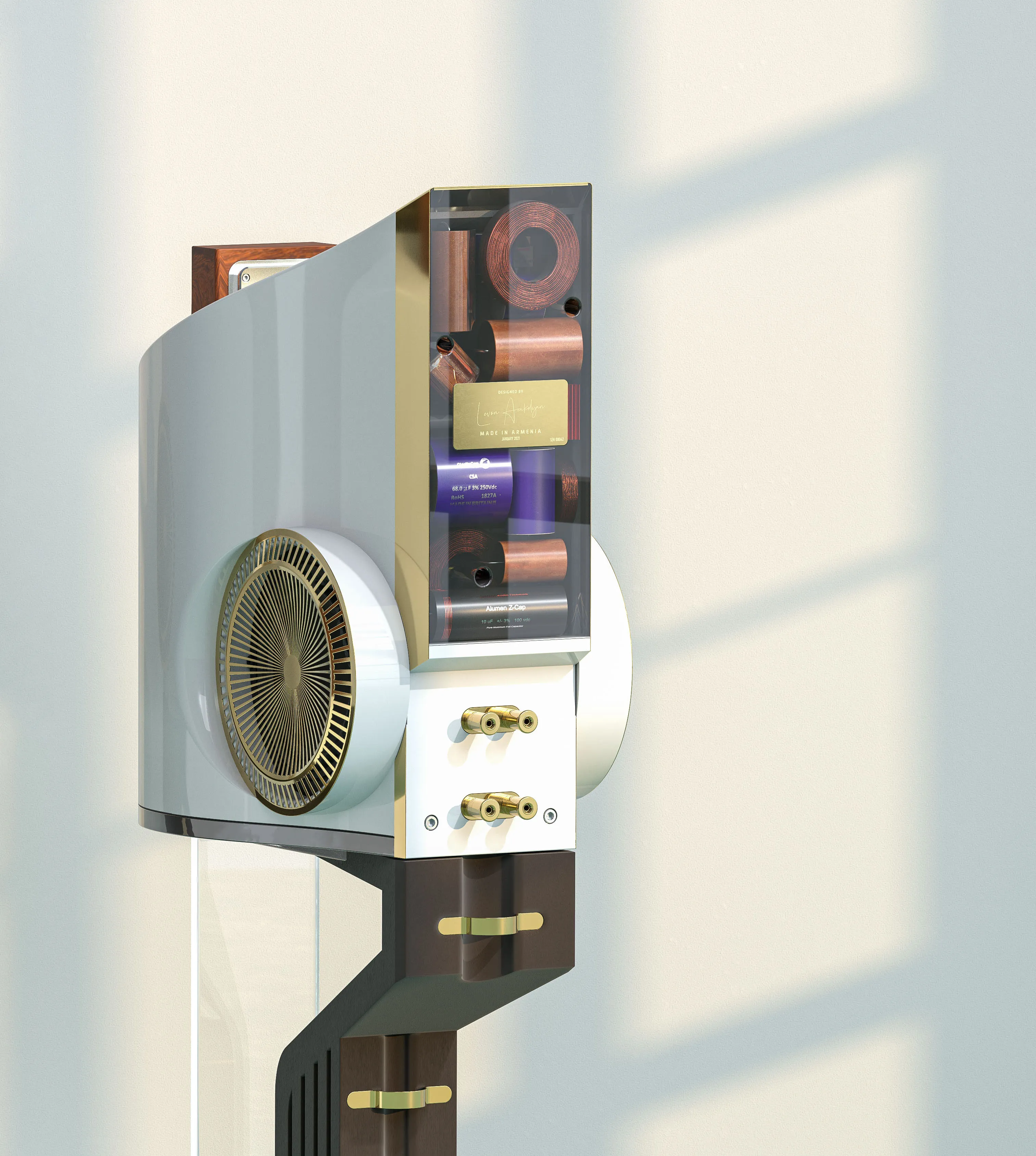
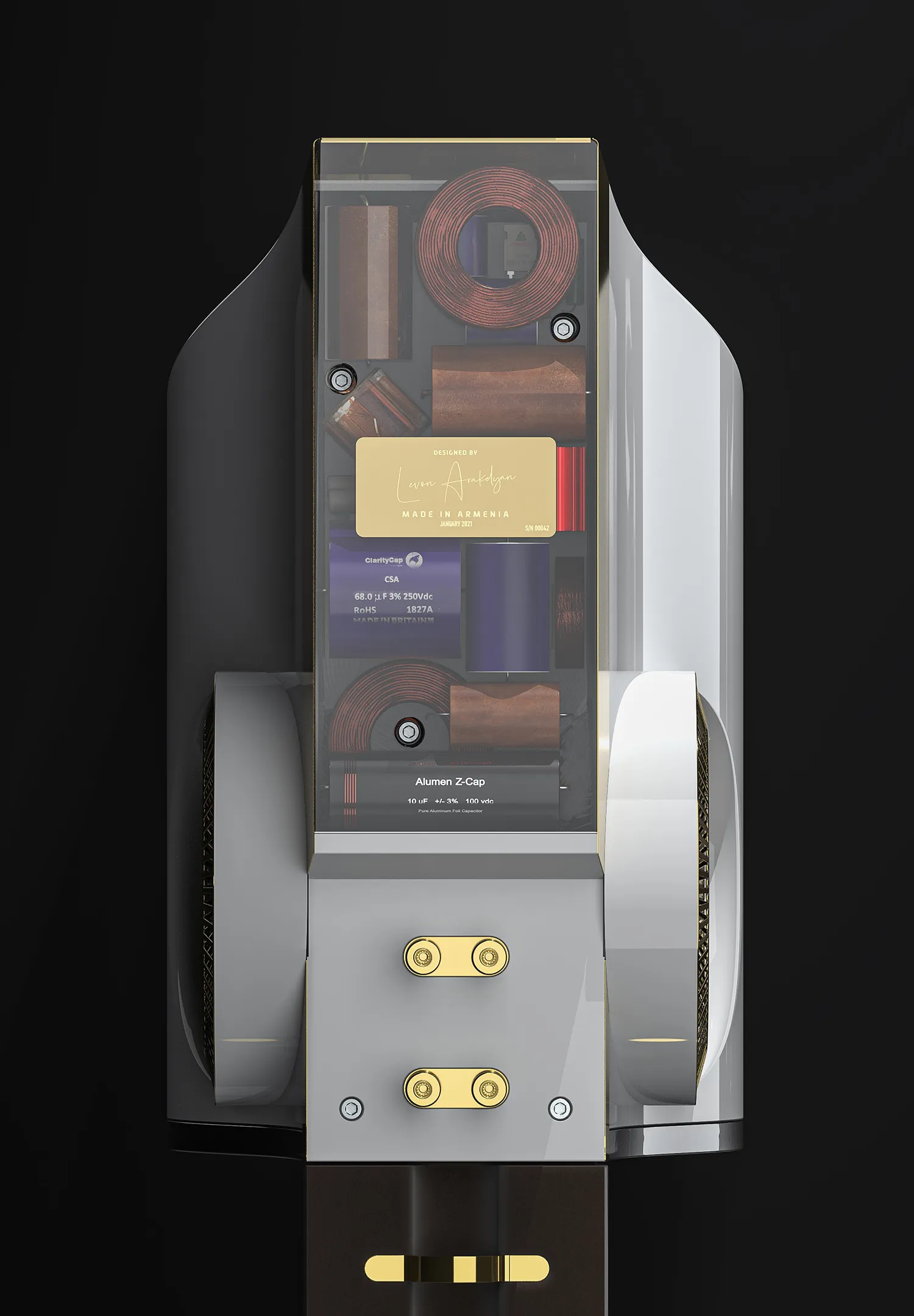
The side-firing passive radiators are folded into the silhouette. The rear face completes the object by putting the crossover on view, clear-potted and mechanically quiet, rather than hiding one of the system's most important decisions inside the cabinet.
Technical notes
Architecture,
made inspectable.
Byurakan is complex, but not arbitrary. Its technical story is a sequence of visible decisions about radiation, material behavior, bass loading, and mechanical grounding.
01 Hybrid baffle
Byurakan does not use the baffle as a neutral mounting plate. The front architecture is part of the acoustic system: open where air and spaciousness are useful, enclosed where isolation and control are needed.
The tweeter works into open space, the midrange is held in its own sealed chamber, and the shape around them is used to influence how energy leaves the speaker and enters the room.
Key decisions
- Open tweeter zone
- Sealed midrange chamber
- Geometry as acoustic tool
02 Planar upper bands
The planar magnetic midrange and tweeter are chosen for low moving mass, fast settling, and the ability to reveal small expressive changes without turning the presentation brittle.
The intent is not exaggerated detail. It is natural tone, clean transient behavior, and enough headroom that music can stay relaxed at realistic levels.
Key decisions
- Low moving mass
- Fast transient recovery
- High usable headroom
03 Controlled openness
A spacious soundstage is easy to promise and hard to control. Byurakan uses open radiation and shaped directivity together, so the presentation can expand beyond the boxes without losing center image density.
The goal is dimensional placement: width, depth, and air, but with instruments and voices remaining specific rather than washed into the room.
Key decisions
- Depth without haze
- Stable center image
- Room energy managed, not ignored
04 Low-frequency engine
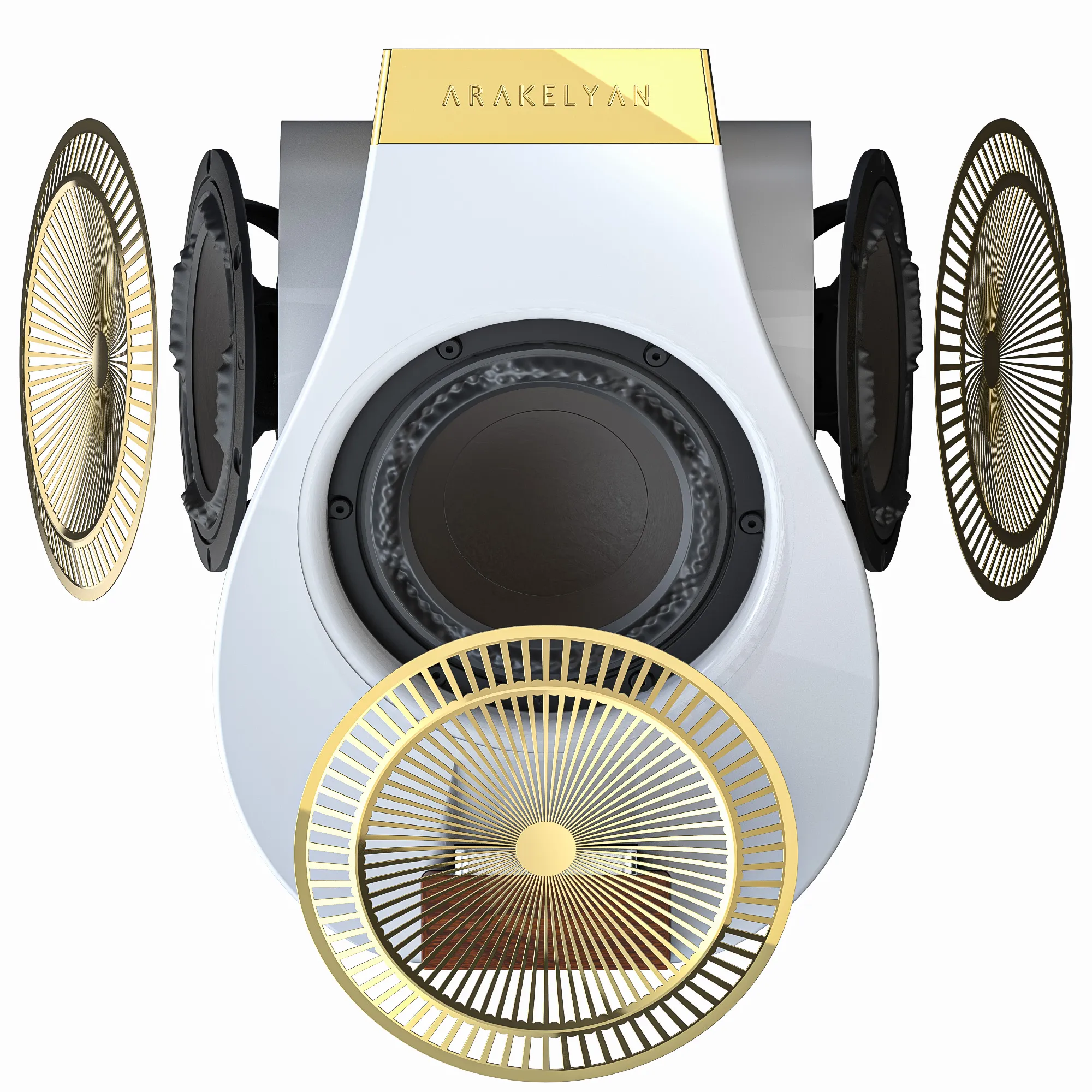
A long-stroke 6.5 inch PURIFI woofer works with two matching side-firing passive radiators. That lets Byurakan pursue bass extension and physical confidence without becoming a miniature tower.
The character target is weight with articulation: fast, dense, textured bass that supports the music rather than advertising itself.
Key decisions
- PURIFI woofer
- Dual side passive radiators
- Extension without bloat
05 ARMAT X chassis
The enclosure is molded from ARMAT X, a composite developed around the opposing needs of loudspeaker cabinets: high stiffness and high internal damping.
A rigid but ringing box adds its own timing and tone. A dead but sluggish box can flatten energy. Byurakan uses material behavior and geometry together to reduce enclosure signature without making the system feel inert.
Key decisions
- Composite material strategy
- Molded unibody geometry
- Lower cabinet coloration
06 External crossover
The crossover is treated as the acoustic heart of the speaker, not a hidden service part. Its job is to make three different radiating systems behave like one coherent source.
The midrange and tweeter network is mounted externally and potted in clear epoxy, giving sensitive components a quieter mechanical environment while making the system logic visible.
Key decisions
- Selected components
- Clear epoxy potting
- Single-wire or bi-amp capable
07 Bolted stand system
The stand is not furniture underneath the speaker. Byurakan bolts to it, creating a single structural object with a fixed relationship between cabinet, height, mass, and floor interface.
A variation of ARMAT X is used in the stand, with ISOAcoustics GAIA III feet handling the final contact with the floor.
Key decisions
- Rigid cabinet-to-stand union
- Matched visual language
- GAIA III floor isolation
Hybrid acoustic architecture
Vast soundstage,
precise imaging.
The tweeter is allowed to operate as a controlled open-backed source, while the waveguide shapes both horizontal and vertical dispersion. The midrange stays in its own sealed volume, away from the woofer's pressure field.
The result is a speaker intended to open spatially without losing its grip on placement, tone, or image density.
Open tweeter section Dipole air and transparency
Embedded waveguide Controlled directivity and smoother room response
Sealed midrange chamber Isolation from woofer pressure and cabinet interaction
Side passive radiators Low-frequency scale without a larger cabinet footprint
Midrange and bass
Color, weight,
and control.
The midrange is where loudspeakers most often betray themselves. Byurakan uses a large-format planar magnetic driver for natural tone, fast transient behavior, and dynamic headroom that lets small inflections remain intact.
Below it, the PURIFI woofer and dual passive radiators are tuned for bass that can be fast, dense, textured, and extended without turning the speaker into a softened miniature tower.
ARMAT X enclosure
The cabinet is engineered
to stay quiet.
Musical instruments use resonant bodies to create sound. A loudspeaker enclosure has the opposite responsibility — it should contribute as little of its own voice as possible, so the drivers and crossover can carry the signal with less smearing.
ARMAT X was developed for that problem: high stiffness, high intrinsic damping, and a molded unibody geometry that avoids the compromises of a cabinet assembled from ordinary panels.
Read about ARMAT X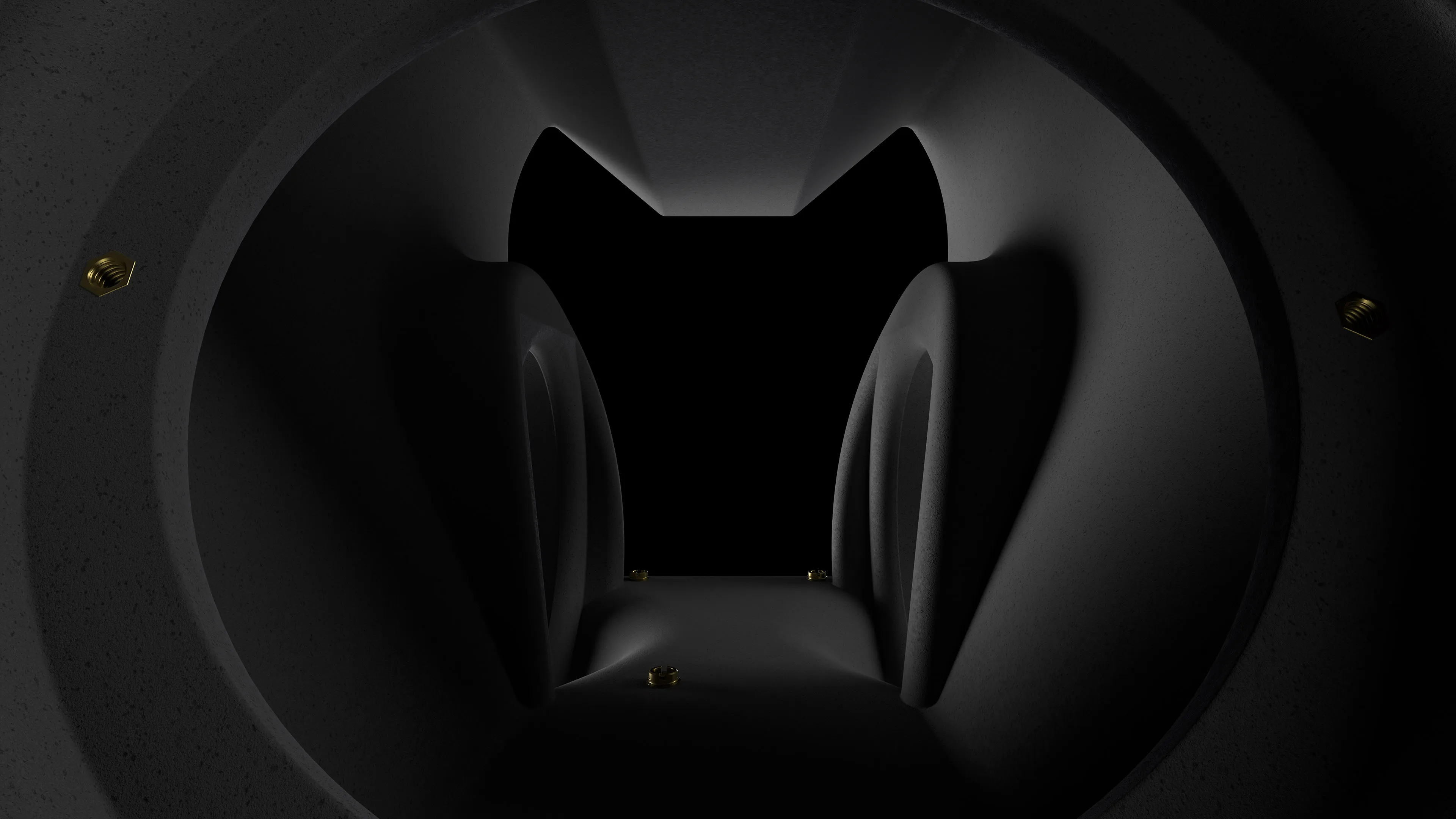
Crossover and rear face
Visible
because it matters.
A crossover is not accessory electronics. It decides how the drivers meet, how phase behaves through the handoff regions, and whether the speaker feels like one source rather than a collection of excellent parts.
Byurakan puts that work on display: selected components, clear epoxy potting, and a rear face that can be admired when you want to look, then ignored when the system disappears into music.
Stand and system
A rigid foundation
for the whole object.
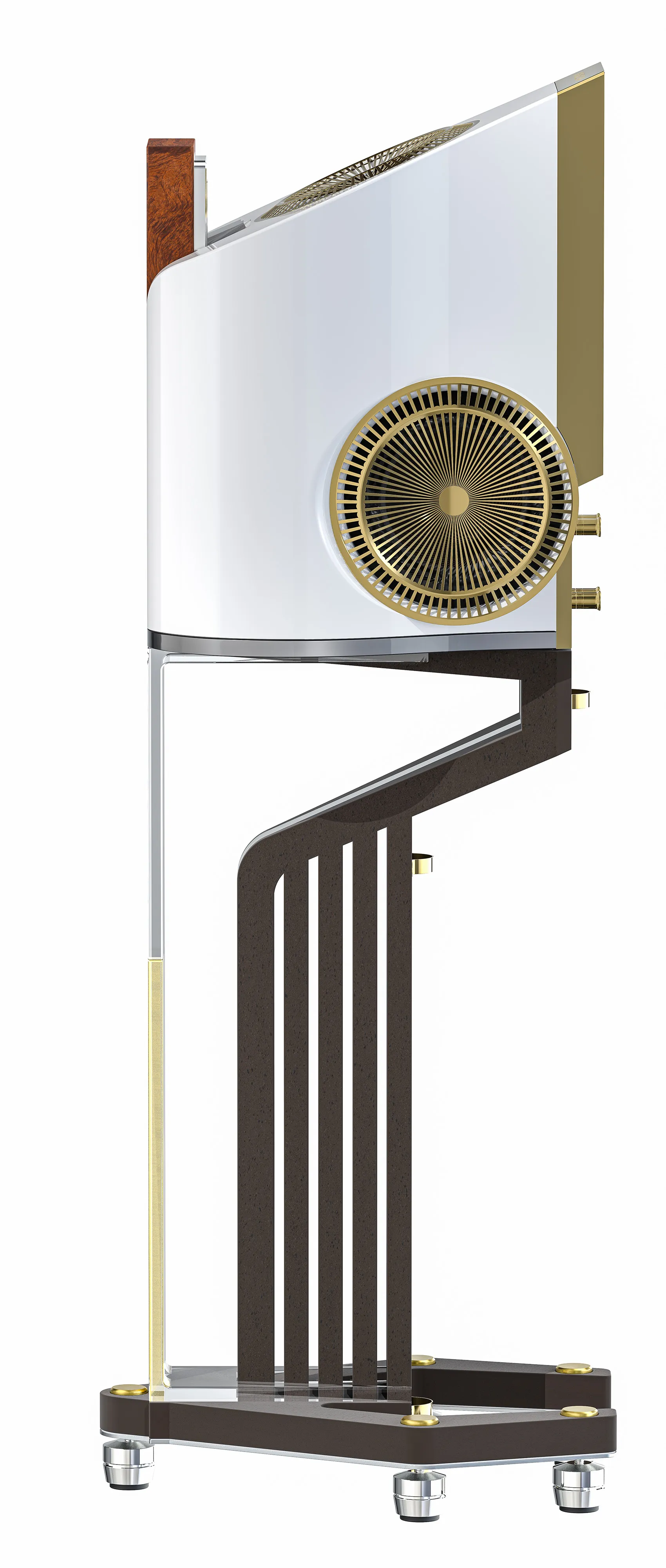
The speaker is not placed on generic furniture. It bolts to a matching stand made from a variation of ARMAT X, forming a rigid union that supports bass performance, stability, and the visual continuity of the object.
ISOAcoustics GAIA III isolating feet complete the interface with the floor, helping preserve clarity while keeping the stance calm and deliberate.
Bolted cabinet interface ARMAT X stand structure GAIA III floor isolation
Specifications
Built to order
as a complete system.
Byurakan is made in Yerevan, Armenia. Each pair moves through machining, assembly, finishing, crossover work, and final checks before delivery planning begins.
Start an inquiry- Type
- Ultra high-end 3-way reference standmount
- Driver count
- 5 per speaker
- Tweeter
- Planar magnetic, open-backed with integrated waveguide
- Midrange
- Large-format planar magnetic in sealed chamber
- Woofer
- 6.5 in PURIFI long-stroke driver
- Low-frequency loading
- Dual side-firing 6.5 in passive radiators
- Enclosure
- ARMAT X molded unibody composite chassis
- Crossover
- External epoxy-potted network; single-wire or bi-amp capable
- Stand
- Matching bolted stand with ISOAcoustics GAIA III feet
- Build
- Made to order in Yerevan, Armenia
- Price
- $24,000 / pair